
The Reductionist Manifesto
These are brief notes on reductionist design, which I intend to keep refining as a basis for my practice and my classes.
Reductionism is an approach relevant to interaction design.
It acknowledges that human attention is scarce, in a context of cognitive overload and shrinking attention spans.
For a piece of interaction design to be called “reductionist”, it should follow these guidelines:
0. Human first
- Experience is the outcome of a person engaging with content. What we design are not the user experience, but the parameters for experience. This is why some people favor the term “meta-designer” instead of “user experience designer”.
1. content first
- Use as few means as possible. That is the core principle of reductionism.
- Start with the text. Brevity, efficiency, accuracy, musicality & rhythm.
- Make sure the text is legible.
- Avoid decoration at all cost. Decoration is expensive in bandwidth and offers more distraction than meaning.
- If you must use visuals, again, use as little means as possible. Use geometrical shapes, as they provide greater cognitive efficiency.
- Visual clarity comes from the thoughtful application of Gestalt principles. (hierarchy through the use of grid and white space, focal point, grouping, contrast).
- Style and personality emerge from a graphical system made of copywriting, typography, colors and the occasional logo or iconset.
2. mobile first (on the web)
- Bandwidth optimisation (Serverside Responsive design in addition to guideline 1.1).
- Adaptive/responsive layout.
- Provide mobile application icons and if relevant, startup images.
- Favor svg as image file format, unless, you know, a photo.
Examples
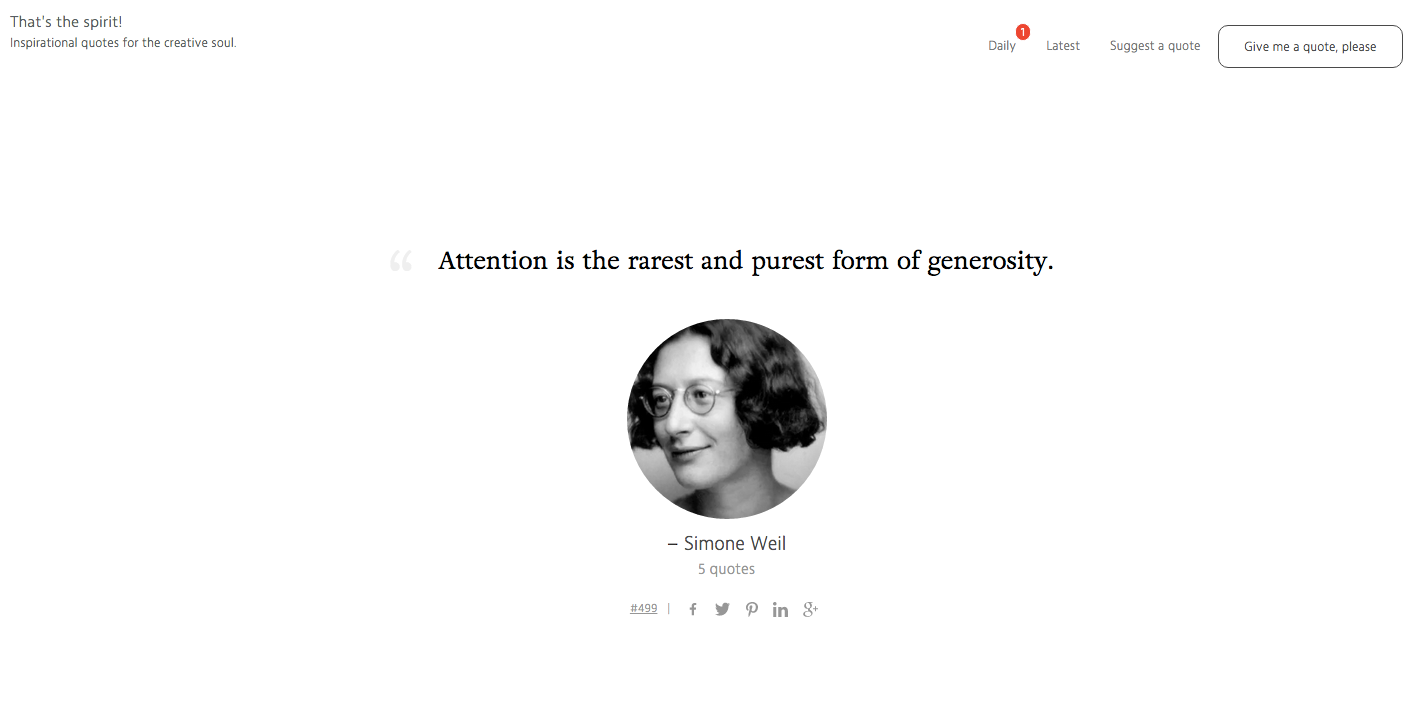
That’s the spirit! gives life to dead words by using a lot of white space, visual hierarchy, typography. The only image is the author’s portrait, to trigger the human ability to quickly read faces so as to make the content and the reader “click” together.
Otl Aicher’s Opera programme is a great example of visual hierarchy with as little means as possible.
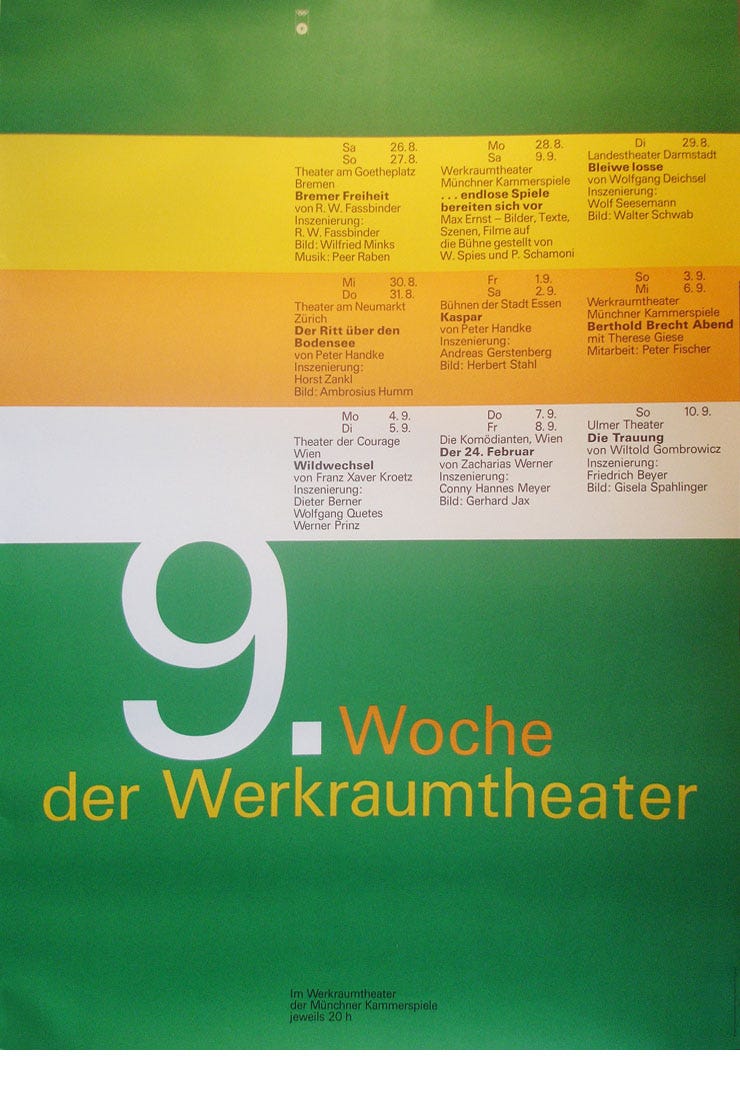
Otl Aicher
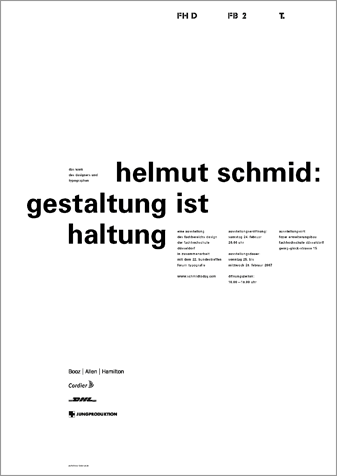
Helmut Schmidt “Design is attitude”.
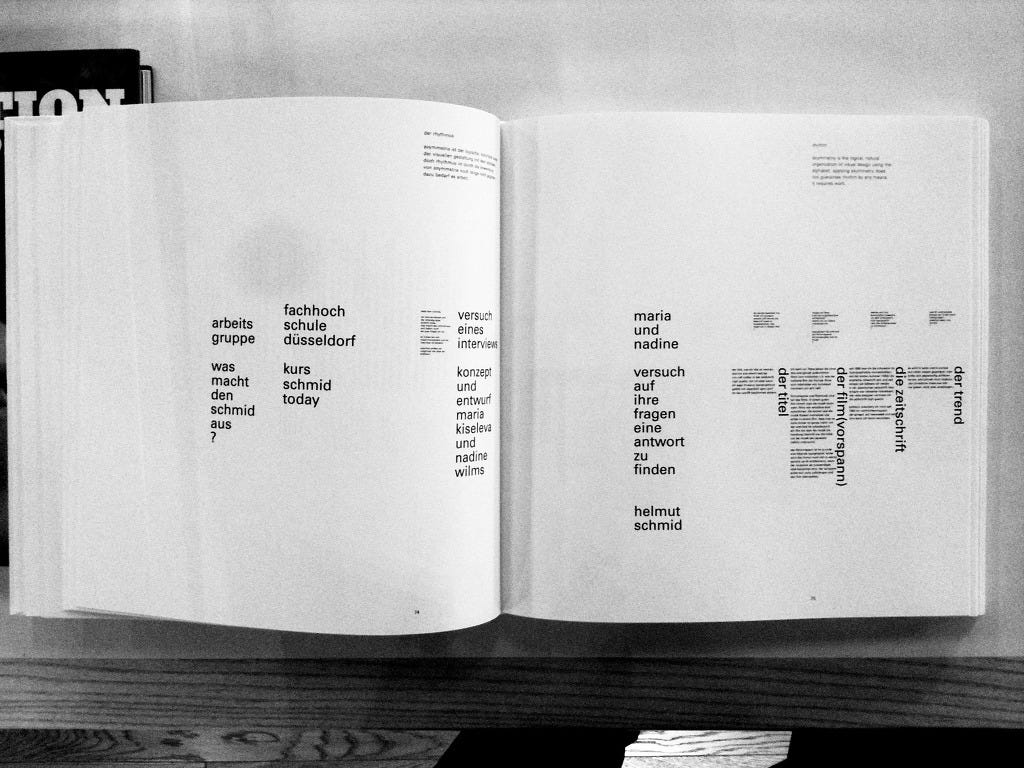
Helmut Schmidt — Design is attitude

Olly Moss _ The great Dictator. Rotate the image in your head.
Conclusion
No makeup, only substance, radical constraints. Perfect execution.
If you are interested in mastering reductionism, you should probably start by exploring the Gestalt laws of perception so you have some knowledge on the constraints of the human perceptual system. Here are the five main laws.
- Gestalt Principles 1: Figure/Ground
- Gestalt Principles 2: Similarity
- Gestalt Principles 3: Proximity, Uniform Connectedness, and Good Continuation
- Gestalt Principles 4: Common Fate
- Gestalt Principles 5: Closure
Then practice by reducing, reducing, and then reducing some more.